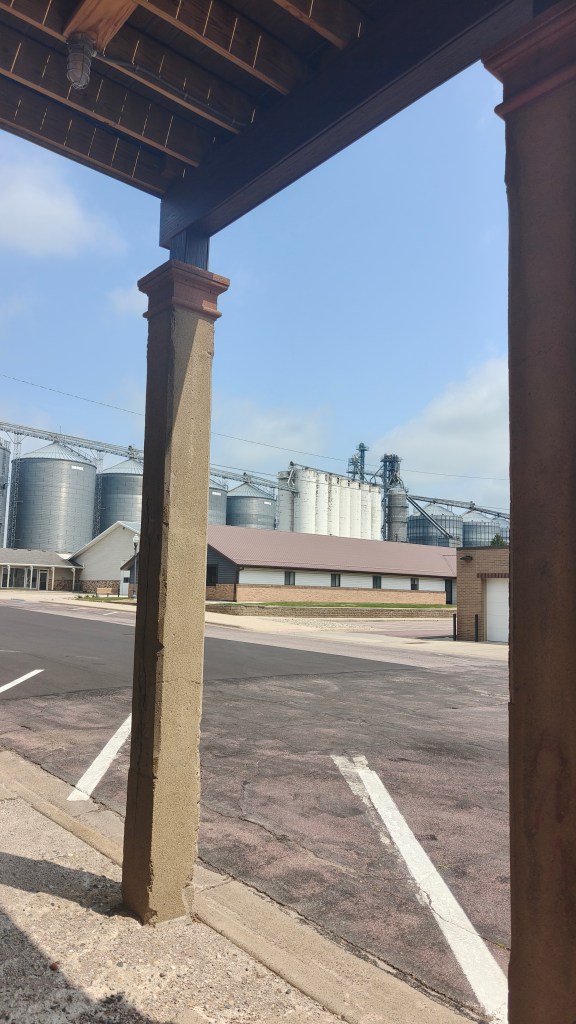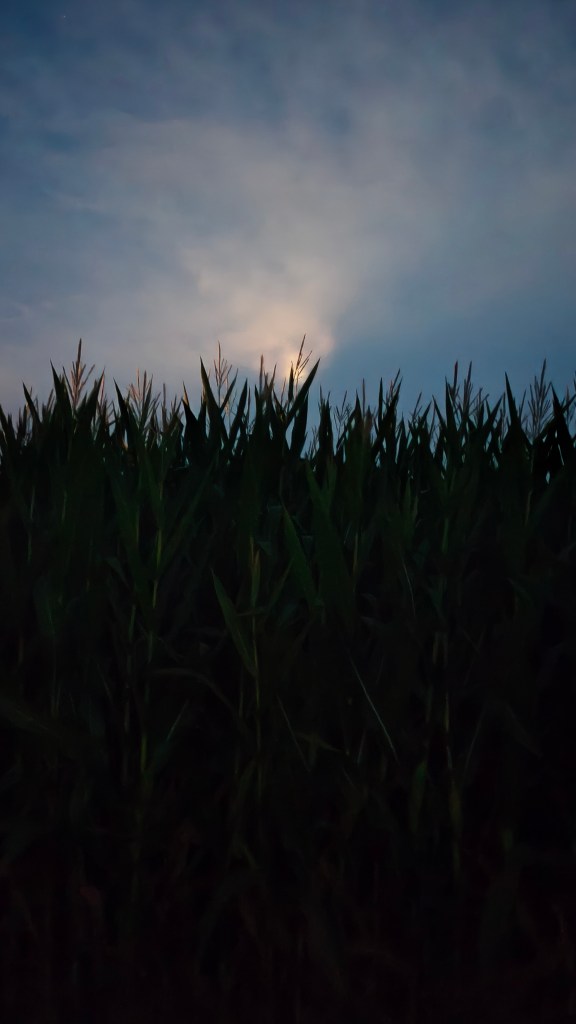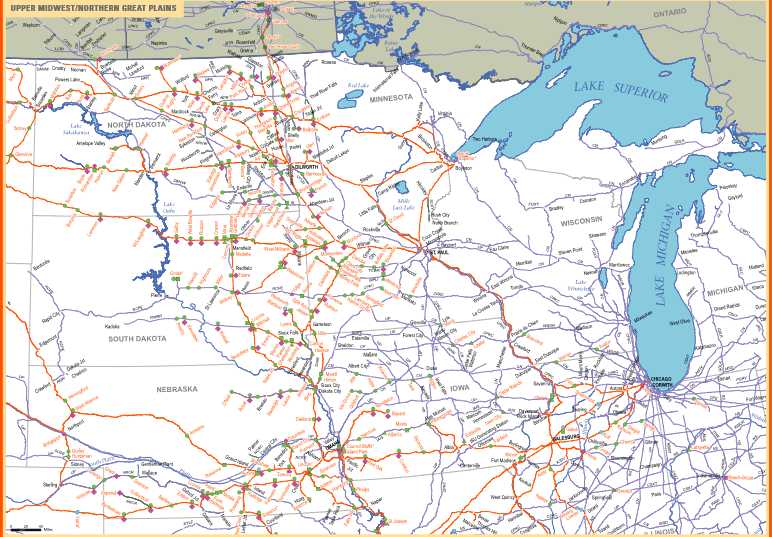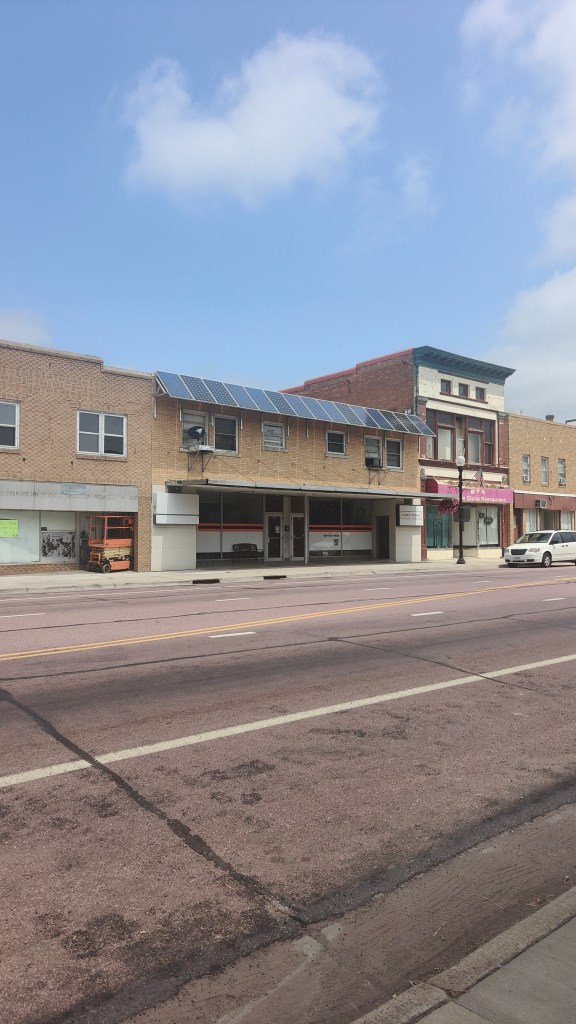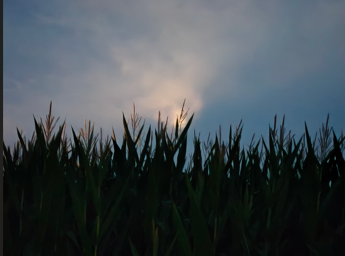
Corn country. The soundtrack in town at 3am is an owl’s quiet call punctuated by huge trucks rattling down Main Street. Their trailers are open like convertibles, filled with corn on its way from some farm to some grain bin. This could be any town in the region. As it stands, this is the second largest town in this county, which is third in corn production in the state, which is the fourth most productive corn state in the country. From these depots, the corn is shuttled along one of dozens of agriculture-only train lines that litter the state to feedlots, ethanol factories, and larger depots where it is shipped across the world.
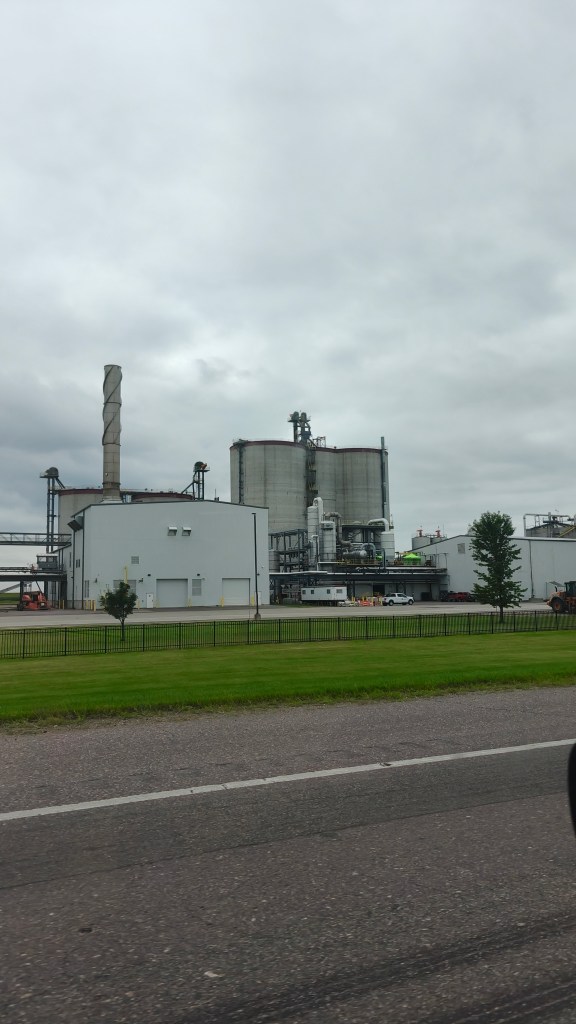
Ethanol factories are not unlike the smoldering refinery cities along the Texas coast, or the dispersed clumps of wind turbines and solar fields and oil rigs in West Texas. They float in the sea of corn like ships with gleaming pipes and glowing smokestacks. In Texas, though, green energy development competes for land directly with agriculture. The first land to change use is the farmland that was least productive for industrial agriculture- dry ranchlands in West Texas. In corn country the economic tension between energy development and agriculture is resolved by using agriculture itself to produce energy. One third of the corn in Minnesota is converted to ethanol, which is a gasoline-like fuel additive. The scale is hard to comprehend. Nearly 4,000 square miles of corn plants are grown specifically for fuel production, which is equivalent in size to all of Dallas-Ft. Worth. The inefficiency is also hard to comprehend. A one acre field of corn, when converted into fuel, produces the ethanol equivalent to 386 gallons of gas, which could optimistically produce 10,000 or so miles of travel. One acre of solar panels produces 200,000 kwh of electricity, which allows a typical electric car to travel 710,000 miles.
German Lutheran churches dating back to the 19th century sit on small plots at the intersections of small farm roads in the fields, while newer evangelical Lutheran churches sit in newish buildings in the town centers. The early stages of the development of the Midwest industrial agricultural production system is ironically what destroyed the agricultural industries of Central Europe, which led to the mass immigration of European peasants in the 19th century from Prussia to this area, where they worked on expanding that very same agricultural system. Descendant families might remain in the area, but the family farm as a form of economic life has collapsed, its potency as a political symbol sharpening in step with its actual liquidation into agricultural monopolies. The corn produced in just this county is worth $800 million, which comes out to $120,000 per household, but the median household income is $36,000. The bulk of the work in the fields is performed by massive, expensive machines, which are prohibitively expensive to buy for the average, or even above-average farmer.
A third of the corn is exported. Minnesota corn growers proudly tout that Mexico is their number one export destination. The US sends nearly 1 billion metric tons of corn to Mexico, which is double what was exported five years ago. Lobbyists for the US Grain Council live and work in Mexico, securing industrial customers to receive corn for animal feed and ethanol. The US corn industry has recently been lobbying the Mexican government to raise the allowable percentage of ethanol in gasoline products, hoping to increase the size of the ethanol import market. Of course, all this trade for corn is in the US dollar. How can a country dominated by the US dollar in trade, with its own domestic markets flooded by exports produced in this extensively developed agricultural complex, build a rival agricultural system to this? And this isn’t even touching on how other US agricultural interests violently extort farmers in Mexico and Mexican farmworkers in the US, often with the help of captured elements of the Mexican state.
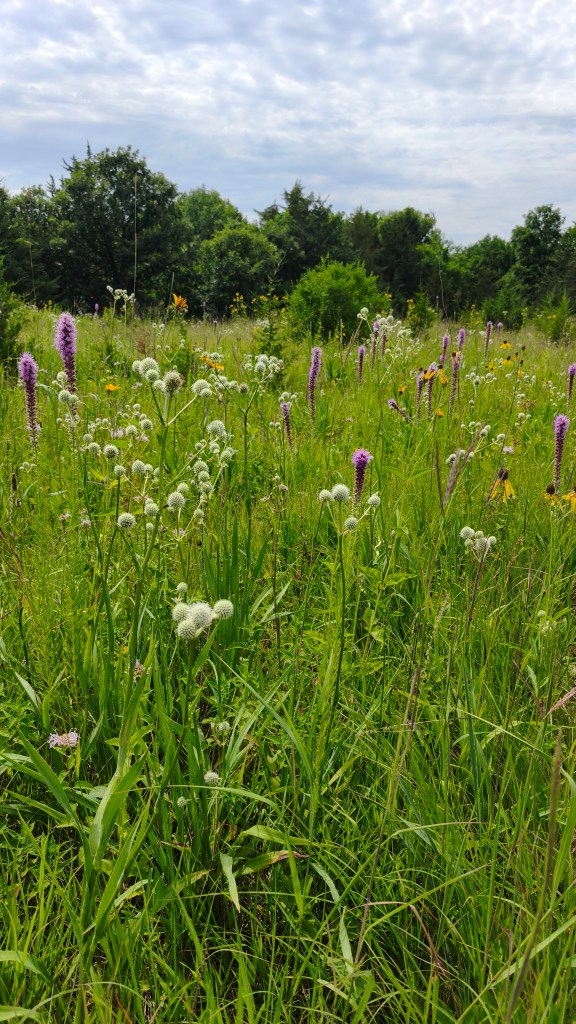
At the edge of a cornfield, there is a random patch of prairie split by a ravine. Maybe its an acre in size, surviving this long in a ‘no mans land’ unclaimed by neighboring corn conglomerates where a road turns sharply and the geography won’t allow continuous fields. Thick with rattlesnake master, blazing star, grayheaded coneflower. Is this a relative of the prairie that once covered this entire region? Milkweed is blooming. Young monarch butterflies warm their wings, and fly around and taste the flowers, preparing for their thousands of miles of flight to Mexico on nectar alone. The cornfields, miles of cornfields, feel dead. You can peer over the flowers and see the road, and the corn, and the tortured and inelegant industrial movement of energy from the sun to the plant to the car. But the meadow is no longer the agricultural system that people live and die and kill to maintain. It is corn. It makes you consider a plague-scale intervention.